

POST /v1/applications/:id/cancel or by TheGuarantors. When that happens, its status is set to canceled and you will receive an application.status.canceled webhook. See Canceling an Application.
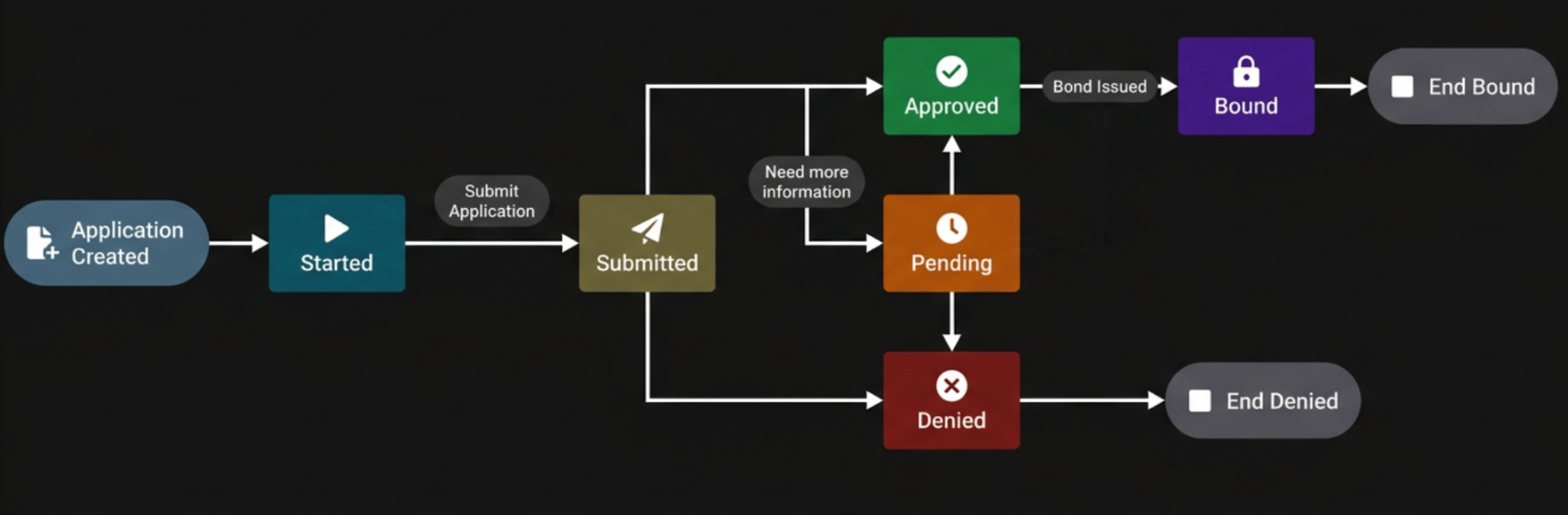
applicant.status.started webhook that notifies users of when an individual applicant has started their application and an applicant.status.submitted webhook when an individual applicant has submitted their application.
Accessing Entities Through the Application Lifecycle
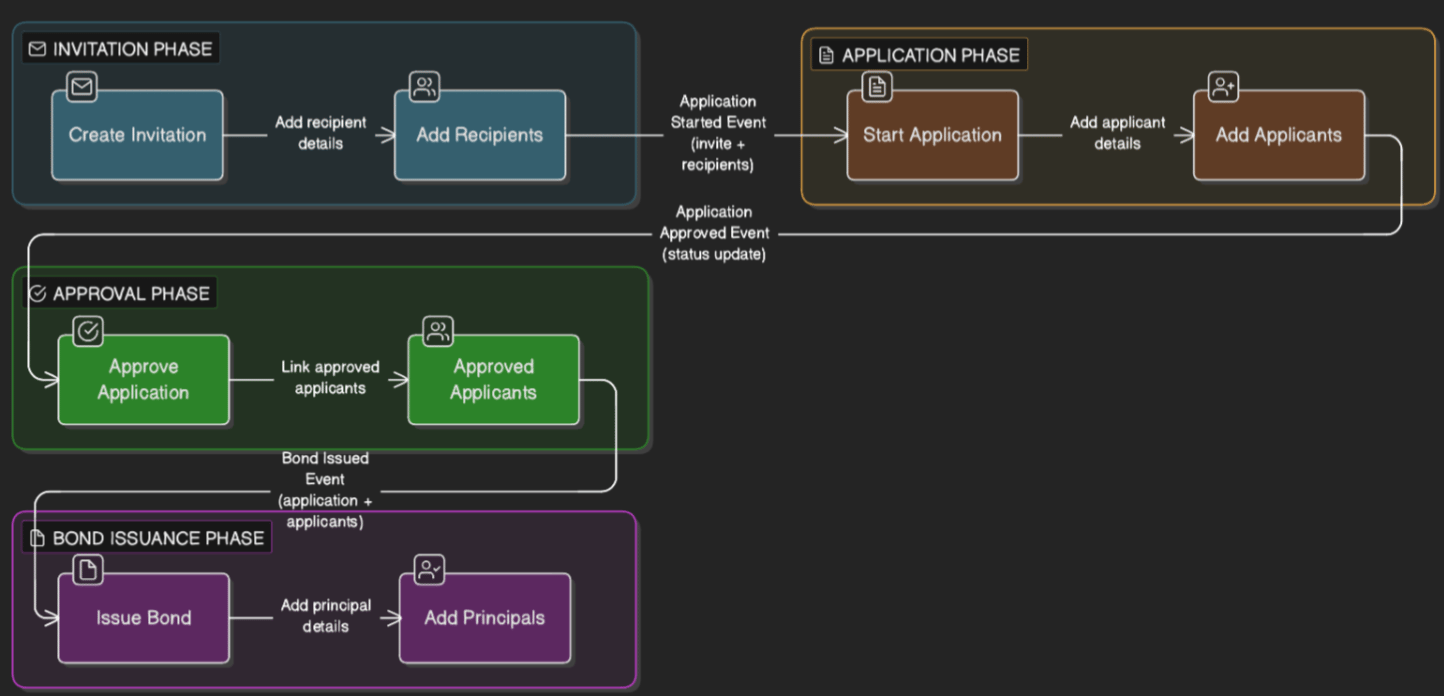
As described above, the application lifecycle follows a progression: Invite → Application → Bond. To more easily navigate this chain, we have provided the following endpoints that enable our users to retrieve the next entity using the ID of the preceding one.Get Application by Invite ID
After an invite is created and the applicant starts their application (theapplication.status.started event), you can retrieve the resulting Application using the Invite ID.
Endpoint: GET /v1/invites/:invite_id/application
Purpose: Retrieves the application object linked to a specific invite ID.
Path Parameter: invite_id (string, required) is the unique identifier for the invite.
Example Request
List Bonds by Application ID
After an application is approved and a bond is issued (bond.status.issued event), retrieve all bonds associated with that application using our GET /v1/applications/:application_id/bonds endpoint.
Description: Retrieves a paginated list of all bonds issued for a specific application, ordered by issue date with the most recent bond appearing first. The first bond in the list is the one currently in effect for the application.
An application usually has a single bond. If its bond is amended after it has been issued, for example to reflect a change to the lease, the original bond is canceled and a replacement bond is issued in its place. The list returns both: the replacement, with status issued, first, followed by the original, with status canceled.
Path Parameters: application_id (string): The unique identifier of the Application.
Query Parameters: page (integer): Specifies the page number for pagination (Default: 1). limit (integer): Specifies the number of bonds to return per page (Default: 10). See Pagination.
Response: A paginated list of bond objects associated with the application.
Example Request
Navigating the Lifecycle Summary
The following steps outline the sequence of API calls to retrieve an Applicant’s bond information: 1. Start (Create Invite)- Action:
POST /v1/invites - Entity Retrieved: Invite
- Action:
GET /v1/invites/:invite_id/application - Entity Retrieved: Application
- Action:
GET /v1/applications/:application_id/bonds - Entity Retrieved: Bond(s)